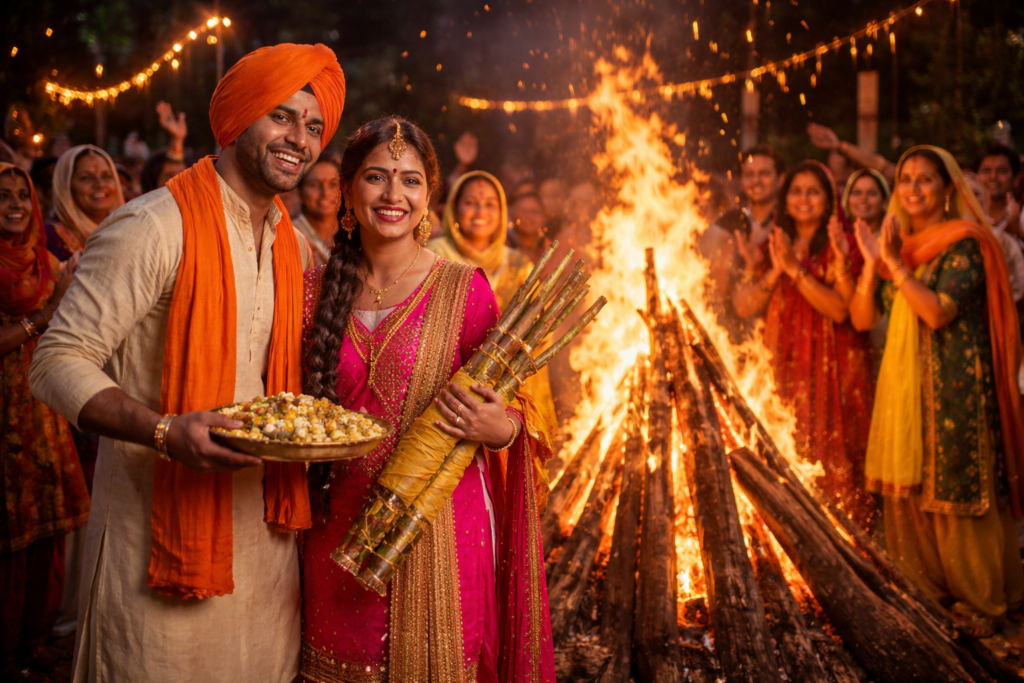
Lohri is one of the most vibrant and joyful winter festivals celebrated in Sonipat and across North India, especially in Haryana and Punjab. Observed every year on 13th January, Lohri marks the end of the winter solstice and the arrival of longer days. The festival is deeply connected with the harvest season and is celebrated with gratitude for nature’s bounty, prosperity, and community well-being.Celebrations are filled with traditional songs and energetic dances such as Bhangra and Gidda. People clap, sing folk songs, and dance around the bonfire, creating a lively and joyful atmosphere. Traditional Lohri songs narrate folklore and celebrate bravery and prosperity.Lohri is a festival of togetherness and community bonding. Families gather to share sweets and festive foods, exchange greetings, and strengthen relationships. The festival holds special significance for newly married couples and newborn babies, for whom the first Lohri is celebrated with great joy and family gatherings.
Lohri is one of the most lively and culturally rich winter festivals celebrated in Sonipat and throughout Haryana and North India. Observed every year on the evening of January 13, the festival marks the end of the coldest days of winter and welcomes the longer, warmer days ahead. Deeply connected to the agricultural cycle, Lohri celebrates the harvesting of winter crops and expresses gratitude for nature’s abundance. For farming communities, it is a time of joy and relief, symbolizing prosperity and hope for a fruitful year.
As dusk falls, families and neighbors gather outdoors to light a sacred bonfire, which becomes the heart of the celebration. The fire represents warmth, positivity, and the triumph of light over darkness. Devotees circle the flames and offer sesame seeds, jaggery, peanuts, popcorn, and traditional sweets into the fire while praying for happiness, good health, and prosperity. These offerings symbolize gratitude and the sharing of blessings. The crackling flames, glowing embers, and winter chill create a magical atmosphere filled with warmth and unity.
Music and dance play a vital role in Lohri celebrations. People sing traditional folk songs and perform energetic dances like Bhangra and Gidda, clapping rhythmically and celebrating with enthusiasm. Folk songs often recount tales of bravery, prosperity, and rural life, preserving cultural heritage and oral traditions. Children go door to door singing Lohri songs and collecting sweets, adding excitement and community participation to the festival.
Lohri is also a festival of relationships and social bonding. Families gather to exchange greetings, share festive foods, and strengthen relationships with friends and neighbors. The festival holds special significance for newly married couples and newborn babies, as their first Lohri is celebrated with great joy, blessings, and family gatherings. Elders bless the younger generation, and the celebrations reinforce the importance of family unity and tradition.
Traditional winter delicacies are an essential part of Lohri festivities. Foods such as rewari, gajak, til ladoos, groundnuts, popcorn, makki di roti, and sarson da saag are enjoyed, providing warmth and nourishment during the cold season. These sesame and jaggery-based treats are considered auspicious and symbolize sweetness and prosperity in life.
In Sonipat, Lohri is celebrated with great enthusiasm in residential areas, villages, and community spaces. Bonfires are lit in courtyards and open grounds, and people gather to celebrate together regardless of age or background. The festival highlights Haryana’s agricultural roots and reflects the warmth, hospitality, and cultural pride of its people.
Beyond its festive joy, Lohri carries deep symbolic meaning. The bonfire signifies the burning away of negativity and the welcoming of new beginnings. It encourages gratitude for nature, strengthens community bonds, and fosters a spirit of generosity and togetherness. The glow of the Lohri fire not only warms the winter night but also symbolizes hope, renewal, and shared happiness.